
- This event has passed.
Can Birding Save Birds?
About Our Program:
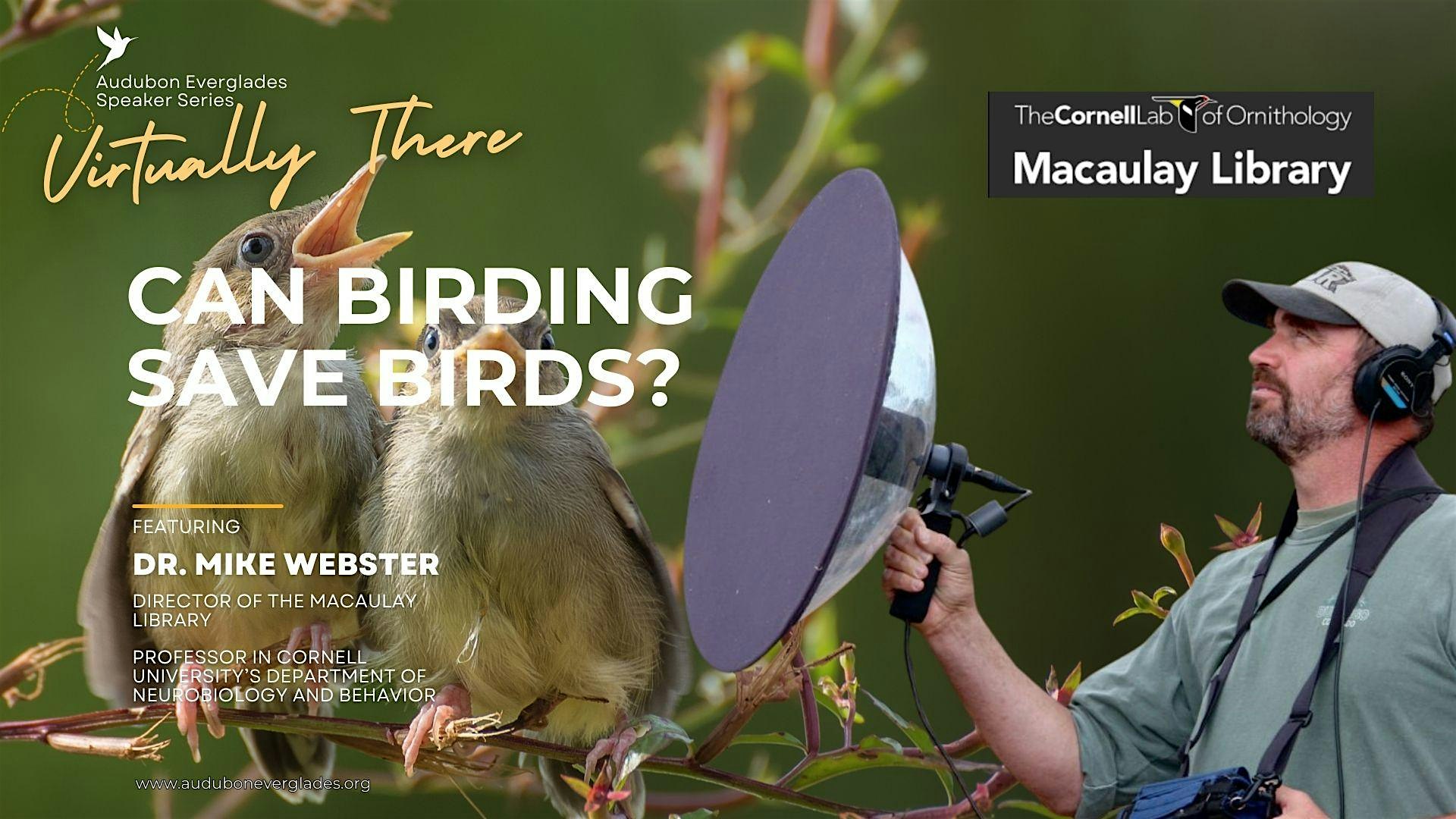
Research on birds (ornithology) has relied heavily on study specimens for centuries, and these specimens have revealed much of what we know about the ecology, life histories and evolution of birds. But today we can also collect a new type of specimen, the “media specimen”, which is an audio/video recording or photo of a bird in nature. These media capture key aspects of wild birds — their acoustic signals, physical displays, and other important behaviors – in ways that traditional physical specimens simply cannot. Webster will illustrate how media specimens can be used for modern day ornithological research: research aimed at both understanding and conserving birds. He also will show how emerging new and inexpensive technologies are allowing everyday “citizen scientists” to collect and use media specimens, for example through eBird, leading to a better understanding of birds at continental and even global scales. These media and other data, contributed by birders across the globe, are now being used directly to help reverse declines in bird populations, and also to engage more people in caring about and conserving nature. Birding can indeed help save birds.
About Our Presenter:
Mike Webster wears two hats at the Cornell Lab of Ornithology. First, he is Director of the Macaulay Library, which is a media collection dedicated to capturing and preserving recordings (audio, video, and photos) that capture the behaviors of wild birds and other animals. In this role his goal is to grow the collection and make it as accessible and useful as possible for people who want to use media for research and educational outreach. Second, Mike is a professor in Cornell University’s Department of Neurobiology and Behavior. In this role he does research on, and also teaches classes about, animal communication and behavior. Through his research and teaching Mike aims for a better understanding of how and why animals communicate with each other, and also what accounts for the evolution of the incredible diversity of signals that we see in nature (think of the diversity of bird songs, plumage colors, and elaborate displays). Most of his research focuses on New World warblers and Australian fairywrens.
About Virtually There:
Virtually There, our popular online speaker series connects you to the world of birds, wildlife, and conservation – right from home.
We bring together renowned scientists, dedicated biologists, acclaimed authors, and passionate conservationists who are eager to share their groundbreaking work and fascinating stories. Each program invites you to explore the wonders of the natural world while deepening your understanding of the challenges and triumphs of conservation.
Whether you’re a lifelong birder, a budding naturalist, or simply curious about the wild world around us, you’re virtually there with us – discovering, learning, and celebrating the beauty of avian life and beyond.
The Virtually There Speaker Series offers engaging, interactive programs that educate, inspire, and connect. We invite you to join us for another extraordinary year of discovery.
Donation Ticket Option
Attendance at Virtually There is always free, but if you choose the Donation Ticket, your gift directly supports Audubon Everglades’ avian conservation and education programs. Every contribution helps us protect local habitats, provide outreach to schools and communities, and bring meaningful programs like Virtually There to life. Your generosity ensures that we can continue connecting people with birds and the natural world while safeguarding critical habitats for future generations.